
Arrest Warrants in Custer County
Nebraska law puts the mechanics in two statutes. Section 29-404 says a judge or magistrate with authority may issue a warrant on a written complaint showing reasonable grounds, and section 29-403 spells out process authority for County and District Court judges, with clerk magistrates holding whatever authority statute gives them. Which court matters in practice. Custer County Court is where misdemeanor cases and felony preliminary hearings usually start, and District Court picks up felonies after bind-over. So a Custer County warrant check begins with the clerk of the court that issued the process. The sheriff is the office to call only for service or custody logistics, not for the underlying record.
Custer County Arrest-Warrant Issuance
You can understand how a Custer County warrant gets issued without anyone publishing the complaint or naming a person. It starts with a written complaint signed by a prosecutor or another authorized complainant. A judge or magistrate then weighs the legal basis and reasonable grounds. If the finding supports it, the warrant recites the accusation in the required form, directs an authorized officer, and commands that the accused be brought before the issuing court or another proper magistrate. The directive can name the Custer County Sheriff. It can also go to a city or village marshal or police officer. Arrests without a warrant happen under separate authority, so an arrest record does not prove a warrant ever existed. The clerk can tell you what process actually sits in the case file, and the Nebraska State Patrol's material explains the statewide agency's role in this sequence.
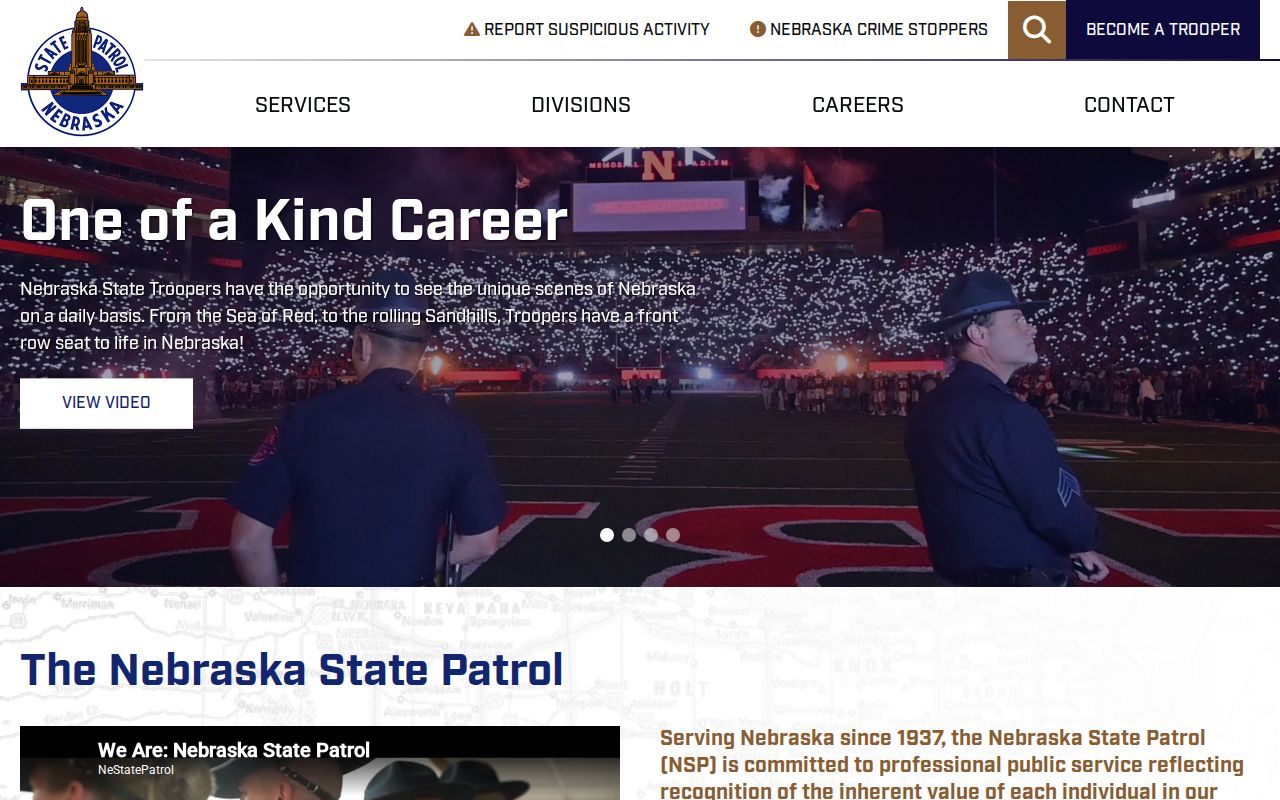
The State Patrol site covers the agency's role; it is not a public list of Custer County warrants.
What Custer County Arrest Warrants Show
A Custer County warrant rarely travels alone; it sits inside a case file. Read the whole entry. That means the court and cause number, the accusation, the issuing judge, the agency directed to serve it, any bond or conditions, and later service or return entries. Operational details stay shielded, though. An officer's assignment, a planned service time, and protected investigation material do not appear in a public case.
| Case or cause number | Connects the warrant event to the correct court file. |
|---|---|
| Complaint or charge | Shows the accusation and offense classification recorded by the court. |
| Issuing authority | Identifies the judge, magistrate, and court that issued process. |
| Directed agency | May name the sheriff, city marshal, or police officer authorized to act. |
| Bond or conditions | Shows court-ordered release terms when publicly entered. |
| Return or later event | May show arrest, appearance, recall, quash, or a new setting. |
A warrant is one step, not a verdict. Dismissal, diversion, a plea, or acquittal in Custer County is a separate later event in the same case.
Custer County Arrest-Warrant Service Roles
Service duties in Custer County divide by office. The sheriff serves, executes, and returns process, apprehends people, attends court, handles extradition, and keeps jail custody. Broken Bow Police is a separate city agency that may be directed to serve city-related papers. Nebraska law lets a warrant name a sheriff, a marshal, or a police officer. No published allocation assigns every warrant to a particular office here.
| Agency | Supported role | What to ask |
|---|---|---|
| Custer County Sheriff | County process, custody, jail, extradition | Whether the office has service or custody information. |
| City or village police | May serve process named to the agency | General service contact, not a court recall decision. |
| County Court | Traffic, misdemeanor, ordinance, preliminary felony | Whether the warrant is current and what court action is required. |
| District Court Clerk | Felony after bind-over and district orders | Whether counsel, motion, bond, or appearance is required. |
Custer County Arrest Versus Bench Warrants
The two warrant types differ at the start. An arrest warrant usually opens a criminal case on a complaint and reasonable grounds, while a bench warrant typically follows a missed appearance or a failure to comply in a case already before the court. Both can put a person in custody. The records and the fix differ, though. A traffic or ordinance failure-to-appear often routes through Custer County Court, and a felony can move from County Court preliminary proceedings to District Court after bind-over. Ask the clerk which court issued the process rather than assuming the county sheriff holds the whole record. The answer shapes where you appear and what you file.
Custer County Arrest-Warrant Questions
Call with the case number in hand. Ask the Custer County clerk which court issued the warrant and whether it remains active. Ask whether a bond or appearance is required, whether counsel can move to recall or quash it, and what next date is set. Save sheriff questions for service and custody logistics, such as where the court's instructions direct you to go.
Before appearing: Speak with an attorney about the personal legal strategy. A voluntary appearance can still involve booking, custody, bond, or a court setting.
The Custer County Attorney prosecutes cases and expressly does not represent citizens or give legal advice. Look elsewhere for personal defense guidance.
Resolving Custer County Arrest Warrants
Start with a JUSTICE search for the case clue, then call the issuing County or District Court in Custer County. Ask what the court wants: a voluntary appearance, a motion, a scheduled hearing, bond, or another procedure. Do not assume a walk-in window. The county publishes no universal bond desk, so follow directions step by step. If the court sends you to the sheriff, confirm the location, the timing, what identification to bring, payment, booking, and custody questions before you go. Nebraska ePayments states plainly that bond payments are not allowed online, so a case or ticket payment screen can never stand in for a court order, a bond instruction, or a warrant recall. Keep every receipt. Ask the clerk when the register will show the court's action so you can prove the warrant was addressed.
Custer County Federal Warrant Process
Federal process lives on a separate track. A federal warrant may never appear in Nebraska JUSTICE, PACER searches federal dockets, CourtListener and RECAP serve as research archives, and the U.S. Marshals District of Nebraska page describes a federal fugitive program. None of them is a complete nationwide warrant roster. Sealed complaints and warrants may simply be unavailable anywhere you can reach. Out-of-state extradition is separate too, and it is not a Custer County arrest warrant even when the county's officers get involved. Ask the court or the sheriff which jurisdiction issued the process and whether a Nebraska case number exists at all. One more thing to remember: a Custer traffic payment cannot resolve a federal warrant or another state's warrant, no matter how quickly you pay it.
Public Access to Custer County Arrest Warrants
Public access has real limits. Nebraska section 84-712 opens public records to request, but law-enforcement investigatory exemptions, juvenile confidentiality, sealing rules, and search-warrant secrecy all restrict what a Custer County office can release. Section 29-817 keeps search-warrant applications confidential until execution. A public arrest-warrant order is not the same file as a confidential affidavit or investigative material.
Request narrowly: Ask for an existing case register entry or order by case number and date range. If the custodian is unclear, the County Clerk can forward the request.
Custer County court staff do not issue clean-record certificates. The clerk will not sign a statement confirming the absence of a record.
Custer County Arrest-Warrant Limits
A public Custer County court file may show what a judge ordered yet say nothing about when an officer will act. Some material stays out entirely. Expect omissions of tactical details, protected witnesses, addresses, photographs, and planned locations. Put these warrant records to safe civic use: checking your own status, learning the court route, and arranging a lawful fix. Never dodge service, interfere with an officer, or confront another person about a warrant. Roles differ, too. The clerk handles the legal record and court procedure, the sheriff handles execution and custody logistics, and counsel handles personal legal strategy.
After a Custer County Arrest Warrant
Nebraska section 29-412 governs bringing a person before a magistrate and returning the warrant. Later docket entries may show appearance, bond, release conditions, a recall, or another hearing. Release does not end the charge. A recall does not erase the historical docket entry either. Ask for the next court date and proof of the court's action. If a federal agency or another state holds a detainer, posting the Custer County bond may still not free the person. The official court record and the current agency answer control.