
Bench Warrants in Custer County
A bench warrant tells an officer to bring someone before a judge. In Custer County it usually follows a missed County Court date, a skipped District Court setting, a broken bond condition, contempt, or unpaid court-ordered amounts. The label the judge uses controls. Nebraska's own materials say "bench warrant" plainly, and the Custer County courts follow that wording, so rely on what the docket says rather than any substitute term.
Custer County Bench-Warrant Timeline
It starts with a hearing, a payment, a purge condition, or some other order from the court. If the person misses it, the register may show a failure-to-appear, contempt, or noncompliance entry. The judge can then issue a bench warrant and set a bond or an appearance requirement. The warrant goes to an authorized officer. A local court report once described a missed preliminary hearing in Custer County followed by a bench warrant and bond action, which shows how the sequence runs, though it is not a current status source. For a live answer, the official court record and the clerk remain the public route. The Custer District Court contact shows where district-level questions land.
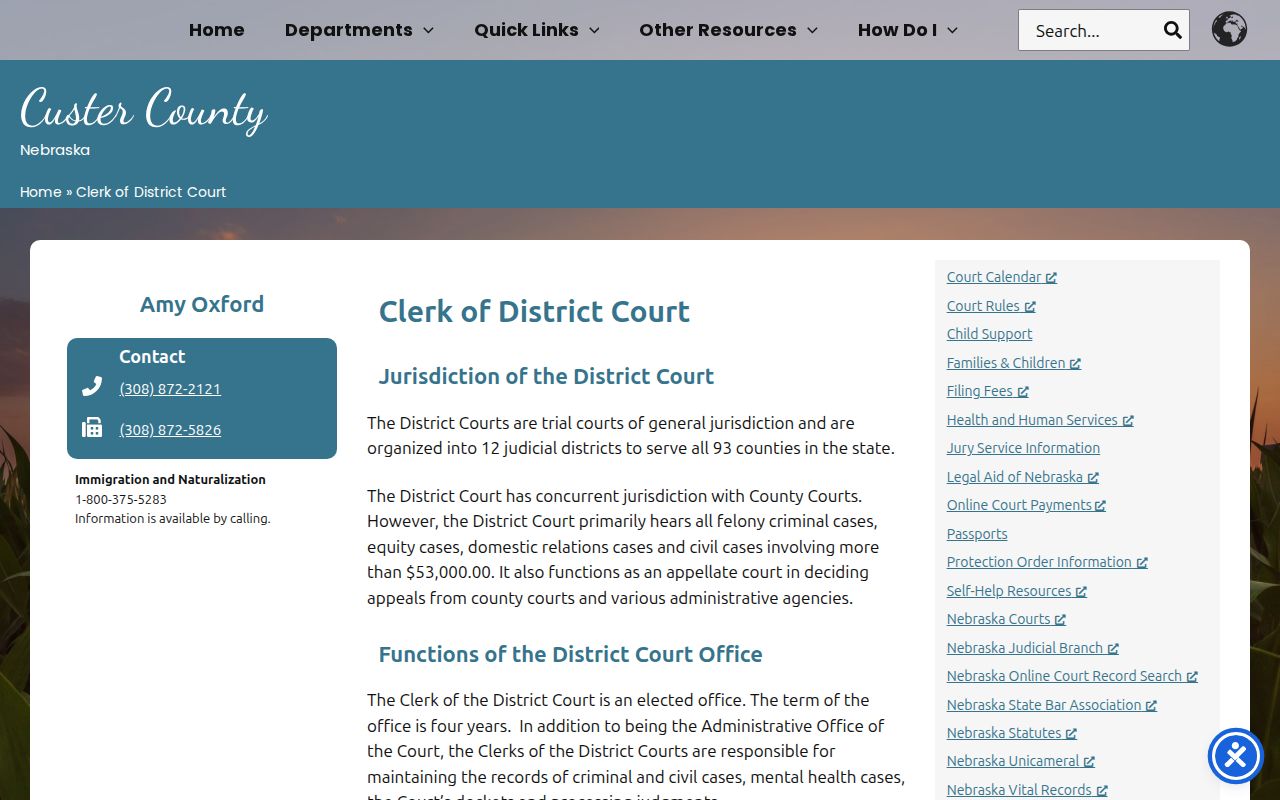
Use the official District Clerk source for district-level process.
Custer County Bench Versus Arrest Warrants
The trigger and the timing set them apart. An arrest warrant usually follows a sworn complaint laying out reasonable grounds for a charged offense in Custer County. A bench warrant, by contrast, grows out of a court obligation the person already had and missed. Failure to pay or failure to appear names the cause; the judge calls the resulting process a bench warrant.
| Question | Bench warrant | Arrest warrant |
|---|---|---|
| What starts it? | Missed appearance or noncompliance | Written complaint and reasonable grounds |
| Where does it arise? | Existing case or court order | Initial criminal process or new charge |
| Likely local contact | Issuing County or District Court | Issuing court, then sheriff or directed police agency |
| What changes it? | Recall, quash, appearance, payment, or court order | Court action, appearance, bond, recall, or later case event |
One Custer County case can hold several kinds of process over time. Read the register first.
Custer County Bench-Warrant Court Map
Custer County Court sits at 604 Heritage Drive and takes traffic, municipal ordinances, misdemeanors, and preliminary felony hearings. Call (308) 872-5761. District Court shares that address and holds felony records after bind-over, domestic relations, child-support orders, writs, and district process. Reach the District Clerk at (308) 872-2121. The sheriff, at 116 S. 11th and (308) 872-6418, handles service, execution, return, and custody.
| Traffic or ordinance | Ask County Court whether the date was missed, whether a warrant issued, and what recalls it. |
|---|---|
| Misdemeanor | Ask County Court for the current event, next setting, and appearance or bond instructions. |
| Felony after bind-over | Ask the District Clerk which order, hearing, motion, or counsel route controls. |
| Child-support contempt | Ask the District Clerk about the contempt order, purge condition, and signed process. |
Child-Support Bench Warrants in Custer County
Child-support contempt moves through a more formal District Court paper trail than a traffic ticket in Custer County. Nebraska Judicial Branch materials lay out the path: an affidavit and motion for a bench warrant, a proposed warrant, a judge's signature, and clerk instructions to send the process to the sheriff. The paperwork carries a contempt order, a purge plan, the county, the case number, party fields, and the judge's signature. Those fields explain why this warrant sits with District Court rather than County Court. If you are facing one, keep your case number handy, call the District Clerk, and ask what order or purge condition the court wants. The County Attorney prosecutes; that office is not your lawyer.
Resolving Custer County Bench Warrants
Search JUSTICE first and identify whether the case sits in County Court or District Court. Then call the issuing clerk before you appear in person. Ask whether the warrant is still active. Ask whether a bond or hearing is required, whether a motion to recall or quash is needed, and what next date remains on the docket. If the clerk sends you to the sheriff, confirm where and when to report, and ask about identification, payment, booking, and custody procedures in Custer County.
Call before appearing: Custer publishes no universal walk-in surrender window, bond desk, accepted-funds list, or same-day release promise.
Paying a traffic fine may not recall the warrant itself. Custer County's official traffic warning says the court must recall it. Keep your receipts, orders, and written instructions after the court acts.
Custer County Warrant Recall and Quash
Recall, quash, and dismiss do different jobs in Custer County. Recall pulls the warrant process back. Quash sets it aside by court action. Dismissal ends or changes the underlying charge, though the docket may still show a historical warrant event, and a served warrant records an execution rather than a finished case.
- Failure to appear
- A missed required court date or setting.
- Failure to comply
- A missed order, condition, payment, or purge requirement.
- Recall
- The court action that ends the current warrant process.
- Quash
- A court action setting aside the warrant or process.
- Bond
- A court-ordered promise, money, or condition tied to return to court.
Ask the Custer County clerk which entry was made and how to get proof of it. A payment screen, a case closure, or an old docket line does not answer all three questions.
Custer County Bench-Warrant Records
A public case file in Custer County can show the case number, the court, the missed event, the issuing judge, the warrant entry, any bond or condition, service or return, and a later recall or compliance. It will not show every law-enforcement detail, since search-warrant applications stay confidential until execution and juvenile, sealed, and investigatory material can be restricted. Keep the request narrow. Ask the office holding the record for a case register entry, a public order, or a specific warrant event within a known date range. The County Clerk at 431 S. 10th Avenue can forward an uncertain Public Records Act request, and the county FAQ says that office quotes an approximate fee before you decide whether to proceed. For district-level warrant records, the District Court contact is the place to start.
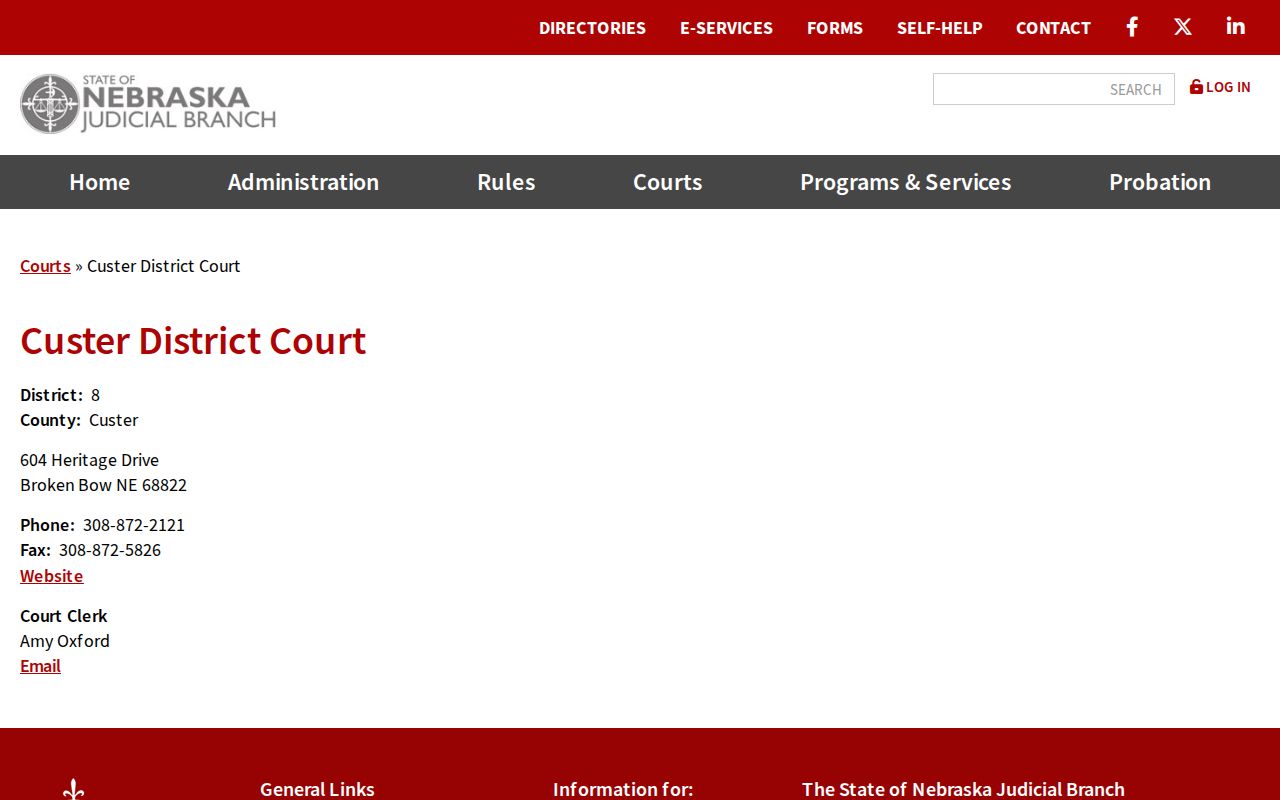
Felony and child-support process belongs to the District Court, not a city office, for Custer County.
Custer County Sheriff and Warrants
The Custer County sheriff serves and returns legal process, makes arrests, handles extradition, attends court, and runs jail custody. Call the office with questions about service or custody. The sheriff posts no public bench-warrant list and runs no 24-hour warrant phone line. No surrender window, bond counter, security rule, or jail intake schedule appears either. Ask about all of that before you show up. Recall, quashing, bond, and the next setting stay with the issuing court.
Keep Custer County Warrant Proof
Once a judge or clerk in Custer County gives you instructions, write down the case number, the call's date and time, receipts, filed motions, court orders, and the next hearing date. Ask when the register will show the recall. Ask whether another office needs proof too. If a traffic matter touches DMV compliance, do that step separately and save the confirmation. A warrant is one event in a case that keeps going. Payment alone proves little. The final check is a dated confirmation from the issuing court, not silence.